Chotha Kalma (4th Kalma) in Arabic — Copy Text & Meaning
Read and copy Chotha Kalma, also known as the Fourth Kalma Tawheed, in Arabic with Urdu and English meaning, Roman transliteration, pronunciation help and authentic references.
لَا إِلَٰهَ إِلَّا اللَّهُ وَحْدَهُ لَا شَرِيكَ لَهُ، لَهُ الْمُلْكُ وَلَهُ الْحَمْدُ، يُحْيِي وَيُمِيتُ، وَهُوَ حَيٌّ لَا يَمُوتُ أَبَدًا أَبَدًا، ذُو الْجَلَالِ وَالْإِكْرَامِ، بِيَدِهِ الْخَيْرُ، وَهُوَ عَلَىٰ كُلِّ شَيْءٍ قَدِيرٌ
Lā ilāha illallāhu waḥdahu lā sharīka lah. Lahul-mulku wa lahul-ḥamd. Yuḥyī wa yumīt. Wa huwa ḥayyun lā yamūtu abadan abadan. Dhul-jalāli wal-ikrām. Biyadihil-khayr, wa huwa ʿalā kulli shay’in qadīr.
Chotha Kalma Meaning in English and Urdu
Read and copy the English and Urdu translations of the Fourth Kalma Tawheed.
There is none worthy of worship except Allah alone, with no partner. To Him belongs the dominion and all praise. He gives life and causes death. He is the Ever-Living who never dies, forever and ever. He is the Possessor of Majesty and Honour. In His Hand is all good, and He has power over everything.
اللہ کے سوا کوئی معبودِ برحق نہیں۔ وہ اکیلا ہے، اس کا کوئی شریک نہیں۔ اسی کی بادشاہی ہے اور اسی کے لیے تمام تعریفیں ہیں۔ وہی زندگی دیتا ہے اور وہی موت دیتا ہے۔ وہ ہمیشہ زندہ ہے اور کبھی نہیں مرے گا۔ وہ عظمت اور بزرگی والا ہے۔ تمام بھلائی اسی کے ہاتھ میں ہے اور وہ ہر چیز پر قدرت رکھنے والا ہے۔
Chotha Kalma in Roman English (Transliteration)
A readable Roman transliteration to help with pronunciation and memorization.
Lā ilāha illallāhu waḥdahu lā sharīka lah. Lahul-mulku wa lahul-ḥamd. Yuḥyī wa yumīt. Wa huwa ḥayyun lā yamūtu abadan abadan. Dhul-jalāli wal-ikrām. Biyadihil-khayr, wa huwa ʿalā kulli shay’in qadīr.
لَا إِلَٰهَ إِلَّا اللَّهُ وَحْدَهُ لَا شَرِيكَ لَهُ
لَهُ الْمُلْكُ وَلَهُ الْحَمْدُ
يُحْيِي وَيُمِيتُ
وَهُوَ حَيٌّ لَا يَمُوتُ أَبَدًا أَبَدًا
ذُو الْجَلَالِ وَالْإِكْرَامِ
بِيَدِهِ الْخَيْرُ وَهُوَ عَلَىٰ كُلِّ شَيْءٍ قَدِيرٌ
Is Chotha Kalma Found in the Quran or Hadith?
Understanding the traditional Kalma arrangement and the Islamic sources behind its wording.
Important Reference Note
The six Kalmas are commonly used as a teaching and memorization arrangement, especially among South Asian Muslims. The complete text traditionally taught as Chotha Kalma is not a single continuous Quranic verse. Its central declaration of Tawheed is established in authentic hadith, while closely related phrases occur in the Quran and other Islamic supplications. The references below show where the principal phrases are found.
Established Dhikr of Tawheed
SahihThis central declaration of Allah’s oneness, sovereignty, praise and complete power is established in Sahih al-Bukhari.
لَا إِلَهَ إِلَّا اللَّهُ وَحْدَهُ لَا شَرِيكَ لَهُ، لَهُ الْمُلْكُ وَلَهُ الْحَمْدُ، وَهُوَ عَلَى كُلِّ شَيْءٍ قَدِيرٌ
He Gives Life and Causes Death
SahihA narration concerning the remembrance made at As-Safa and Al-Marwah includes the words affirming that Allah gives life, causes death and has power over everything.
لَا إِلَهَ إِلَّا اللَّهُ وَحْدَهُ لَا شَرِيكَ لَهُ، لَهُ الْمُلْكُ وَلَهُ الْحَمْدُ، يُحْيِي وَيُمِيتُ، وَهُوَ عَلَى كُلِّ شَيْءٍ قَدِيرٌ
All Good Is in Allah’s Hand
Quran 3:26Surah Ali ‘Imran contains related wording affirming that all good is in Allah’s Hand and that He has power over everything.
بِيَدِكَ الْخَيْرُ إِنَّكَ عَلَىٰ كُلِّ شَيْءٍ قَدِيرٌ
Possessor of Majesty and Honour
Quran 55:27Surah Ar-Rahman describes Allah as the Possessor of Majesty and Honour.
ذُو الْجَلَالِ وَالْإِكْرَامِ
Virtues of Kalma Tawheed in Authentic Hadith
Authentic narrations concerning this declaration of Allah’s oneness.
Reciting the Declaration One Hundred Times
SahihThe Messenger of Allah ﷺ taught that whoever recites the declaration of Tawheed one hundred times in a day receives a great reward. One hundred good deeds are recorded, one hundred sins are removed, and the recitation becomes protection from Satan until the evening.
Remembrance at As-Safa and Al-Marwah
SahihIt is narrated that the Messenger of Allah ﷺ recited a declaration affirming that none is worthy of worship except Allah alone, that the dominion and praise belong to Him, that He gives life and death, and that He has power over all things.
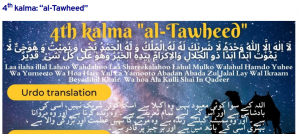
Chotha Kalma Arabic Image
Image presentation of the Fourth Kalma Tawheed.
Frequently Asked Questions About Chotha Kalma
Quick answers about the Fourth Kalma Tawheed, its meaning and its Islamic references.
What is the name of Chotha Kalma?
Chotha Kalma is commonly called Kalma Tawheed, meaning the declaration of Allah’s absolute oneness.
What does Chotha Kalma teach?
It affirms that only Allah is worthy of worship, He has no partner, all sovereignty and praise belong to Him, and He has power over everything.
Is the complete Chotha Kalma one Quranic verse?
No. The complete form commonly memorized as Chotha Kalma is not one continuous Quranic verse. Its principal phrases are supported by authentic hadith and related Quranic wording, including Quran 3:26 and 55:27.
Can I copy the Chotha Kalma Arabic text?
Yes. Use the Copy Arabic button near the top of this page to copy the complete text for personal study or sharing.
Related Islamic Articles
Explore more Kalmas, Arabic duas and Islamic reminders.
All Six Kalmas in Arabic
- 1st – Pehla Kalma Tayyab
- 2nd – Doosra Kalma Shahadat
- 3rd – Teesra Kalma Tamjeed
- 4th – Chotha Kalma Tauheed (this page)
- 5th – Panchwa Kalma Istighfar
- 6th – Chhata Kalma Radd-e-Kufr